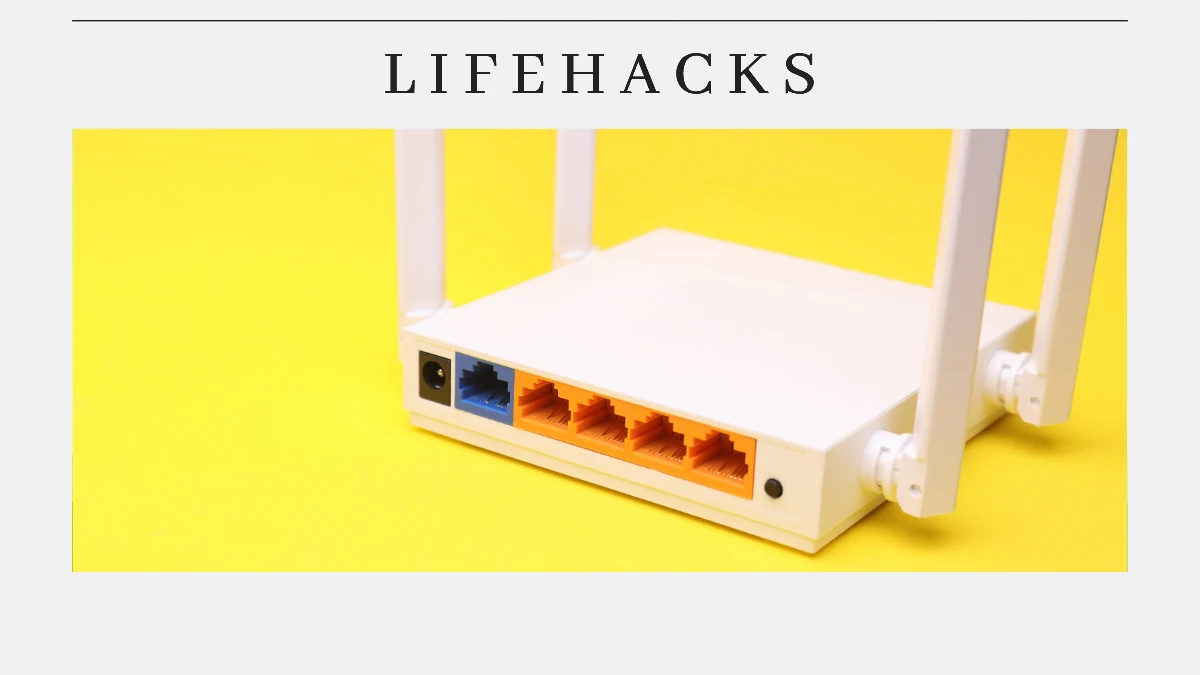
Telecommunications and wireless products have become an integral part of everyday life. Many people rely on wireless keyboards and mice for their computers, as well as Bluetooth speakers, wireless headphones, and smart devices with sensors. Wireless communication depends upon the transmission of electromagnetic signals.
Since it does not use cables, communication is carried out through the air using radio frequency (RF) waves. RF signals play an important role in carrying digitally encoded information to analog carrier waves.
This article will provide information related to RF signals, from their definition to how data can be transmitted wirelessly. Additionally, you will learn that wireless technology is not without challenges that need to be overcome, from lab testing to certification.
What is an RF signal?

Radio Frequency (RF) signals are electromagnetic waves with a frequency range from 3 kHz to 300 GHz. Various wireless applications, such as communication devices, electronics, and modern technology, rely heavily on these signals.
Many fields use RF signals to transmit data, for example, to help send voice, data, and images for mobile phones. Additionally, it also plays a role in facilitating satellite communications and wireless networks.
The radio frequency range includes:
- Very low frequency (VLF): 9 kHz to 30 kHz
- Low frequency (LF): 30 kHz to 300 kHz
- Medium frequency (MF): 300 kHz to 3 MHz
- High frequency (HF): 3 MHz to 30 MHz
- Very high frequency (VHF): 30 MHz to 300 MHz
- Ultra-high frequency (UHF): 300 MHz to 3 GHz
- Super high frequency (SHF): 3 GHz to 30 GHz
- Extremely high frequency (EHF): 30 GHz to 300 GHz
Here are some examples of wireless technologies that use RF signals:
- WiFi: Operating on the 2.4 GHz, 5 GHz, and 6 GHz bands.
- Bluetooth: Operating at 2.4 GHz.
- Near Field Communication (NFC): Operating on the 13.56 MHz band.
- Ultra-Wideband (UWB): Operating on bands between 3.1 GHz and 10.6 GHz.
- Cellular: Operating using LTE Band 1 to LTE Band 7.
- LPWAN: Operating using the 920 MHz to 923 MHz band.
Fundamentals of RF System Engineering

Fundamentals of RF System Engineering are concepts that define information that is encoded, transmitted, and received wirelessly. These concepts rely on three basic principles, namely frequency, bandwidth, and modulation.
Frequency
Frequency is the number of electromagnetic wave cycles that occur in one second. This principle is measured in Hertz (Hz). The function of frequency in RF is to describe the rate of radio wave oscillation. It is commonly used to define RF channels or specific frequency bands.
By using different carrier frequencies, RF signals can propagate through the same space simultaneously without interfering with each other. Various wireless services, such as WiFi, FM Radio, Bluetooth, and NFC, operate in specific allocated frequency bands.
Bandwidth
Bandwidth is the range of frequencies occupied by the signals carried by a single channel. This principle is an important factor in determining how much information can be transmitted.
The function of bandwidth in RF is to define the difference between the highest and lowest frequencies present in a modulated signal or channel. For example, an RF signal that uses frequencies from kHz to 100 kHz has a bandwidth of 10 kHz.
The greater the bandwidth, the higher the possible data transfer. Additionally, the better the quality of the components in an RF system, the better its operational bandwidth.
Modulation
Modulation is the process of transmitting information by changing one or more properties of a high-frequency carrier signal. There are several types of modulation, depending on specific application factors, the desired signal-to-noise ratio, and the available bandwidth.
The function of modulation in RF is as a receiver system to extract the original information from the wave. Here are the three main types of modulation methods:
- Amplitude Modulation (AM): The amplitude (strength) of the carrier signal is varied in accordance with the information signal.
- Frequency Modulation (FM): The frequency of the carrier signal is varied in accordance with the information signal.
- Phase Modulation (PM): The phase (starting point) of the carrier signal is shifted relative to the information signal.
Transmission Process

The RF signal transmission process is the process of converting information into electromagnetic waves, modulation, demodulation, and data output. Here is the process of telecom device work in more detail:
- Information Input: Initial data (sound, video, text) is processed into electrical/digital signals.
- Oscillation (Transmitter): An oscillator generates a high-frequency carrier wave.
- Modulation (Transmitter): Information is combined with the carrier signal using techniques such as AM (Amplitude Modulation) or FM (Frequency Modulation).
- Amplification (Transmitter): The modulated signal is amplified by an RF amplifier.
- Transmission (Transmitter): The antenna transmits the modulated signal as an electromagnetic wave into the air.
- Reception (Receiver): The receiving antenna captures the electromagnetic wave.
- Amplification & Filtering (Receiver): The received signal is amplified and filtered to reduce interference.
- Mixing & Demodulation (Receiver): The signal is mixed with a local oscillator signal to convert the frequency (to Intermediate Frequency or IF), then demodulated to separate the original data.
- Data Output: The original data (audio, video, etc.) is recovered and presented to the user.
Radio Frequency Signal Disturbance
RF signals do not transmit without obstacles; there are disturbances that may occur during the data transmission process. In principle, there are two main types of RF signal interference: noise and interference.
These are two different types of interference. RF noise is unwanted electrical signals from natural sources or internal devices. Meanwhile, RF interference is a more structured disturbance caused by external sources.
RF noise
RF noise is an unavoidable signal disturbance in electronic and communication systems. This disturbance comes from internal and natural sources. Internal disturbances include random thermal motion of electrons in conductors, fluctuations in the flow of charged particles in semiconductors, or other noise generated by circuit components.
Meanwhile, natural interference from external sources includes natural phenomena such as lightning, solar radiation, and cosmic noise from outer space. This interference results in an increase in the noise floor at the receiver, a reduction in the Signal-to-Noise Ratio (SNR), and a limitation in the system’s ability to accurately detect weak signals.
RF interference
RF interference (RFI) is signal interference from electromagnetic interference (EMI). This interference comes from other devices in the surrounding environment. RFI can be intentional or unintentional.
Intentional RFI involves sending strong signals at specific frequencies to block or disrupt communications. This is often used for military or security purposes.
Meanwhile, unintentional interference is caused by everyday electronic devices, such as microwave ovens, computers, or electrical cables that emit RF energy. RFI impacts wireless network performance, causing connectivity loss and signal distortion.
Real-World Challenges
The application of RF signals faces obstacles beyond signal interference. There are also many challenges related to environmental factors, system design complexity, and regulatory constraints. These factors inevitably reduce performance and reliability compared to ideal scenarios.
Environmental factors
Environmental factors are one of the challenges of using RF signals. Objects such as buildings, fields, and trees often reflect RF waves. Additionally, walls or large metal objects can also block signals, thereby obstructing and weakening them.
Moreover, to obstruct objects, as explained earlier, there is also IRF. Devices such as microwave ovens, computers, or electrical cables that emit RF energy can degrade signal quality and reduce the signal-to-noise ratio (SNR).
System design complexity
System design complexity is a challenge that arises from impedance mismatch, signal integrity issues, optimal power consumption, and RF component problems.
Components such as antennas, cables, and amplifiers that have impedance mismatches will cause power loss, reduced efficiency, and potential circuit damage.
Maintaining signal integrity is difficult due to phenomena such as skin effect, cable attenuation, and phase shift. Optimal power consumption to maintain connectivity is also a challenge in designing systems such as Internet of Things (IoT) devices.
Additionally, RF component issues also need to be considered in integration and placement. Components placed too close together can cause EMI and complicate thermal management.
Regulatory limitations
Every telecommunications and wireless device that uses RF signals must comply with regulations. Standards for their use are regulated globally and locally.
Global regulatory bodies include the International Electrotechnical Commission (IEC), the Federal Communications Commission (FCC), and the European Telecommunications Standards Institute (ETSI). At the local level, each country has its own authority for the use and marketing of telecommunications and wireless products.
Here are some examples of compliance authorities around the world:
- Brazil: Agência Nacional de Telecomunicações (ANATEL)
- Cambodia: Telecommunications Regulatory Authority of Cambodia (TRC)
- Indonesia: Directorate General of Digital Infrastructure (DJID)
- India: Wireless Planning & Coordination (WPC) Equipment Type Approval (ETA) and Telecommunication Engineering Centre (TEC) Mandatory Testing and Certification of Telecom Equipment (MTCTE)
- Malaysia: Malaysian Standards and Industrial Research Institute (SIRIM)
- Mexico: Norma Oficial Mexicana (NOM)
- Philippines: National Telecommunications Commission (NTC)
- Singapore: Infocomm Media Development Authority (IMDA)
- Thailand: National Broadcasting and Telecommunications Commission (NBTC)
- Vietnam: Ministry of Science and Technology (MoST)
These regulations cannot be ignored, as this process is part of the telecom compliance lifecycle. Compliance with these regulations requires several steps to be taken. These steps are as follows:
- Document preparation: Gather all necessary technical documents
- RF testing: Evaluate wireless signal transmission
- Electromagnetic Compatibility (EMC) testing: Ensure that the device does not interfere with other devices
- Electrical safety testing: Ensure that the device is safe to use
- Laser safety testing: Testing for laser-based devices
- Specific Absorption Rate (SAR) testing: Evaluate RF energy exposure to humans
- Type approval process: Apply to the relevant authority
- Certificate issuance: An official certificate is issued
These are the general steps that must be followed when using telecommunications and wireless devices that use RF signals. Some countries may have slight differences depending on the policies of their respective authorities.
Table of Contents
Muhammad

Hello, my name is Rifqi. I have studied how language can influence human interaction and impact sociocultural aspects. Currently, I work as a corporate content writer at Dimulti Type Approval. Through my writing, I hope to make difficult technical matters or everyday issues easier for you to understand.
Related Articles