Continuously evolving technology demands constant innovation in various sectors of communication devices. Wireless modules play the most significant role in this regard.
Modern wireless devices such as smartphones, wearables, the Internet of Things (IoT), and smart homes are inseparable from everyday life. Behind all these devices, wireless modules play a very important role.
A classic problem that often occurs in modern devices is connectivity versus power consumption. However, there is now the concept of power-saving algorithms, which make it possible to reduce the power consumption of wireless devices. This article will help you understand why power efficiency matters more than ever.
What Is a Wireless Module and Where Is Its Power Consumed?
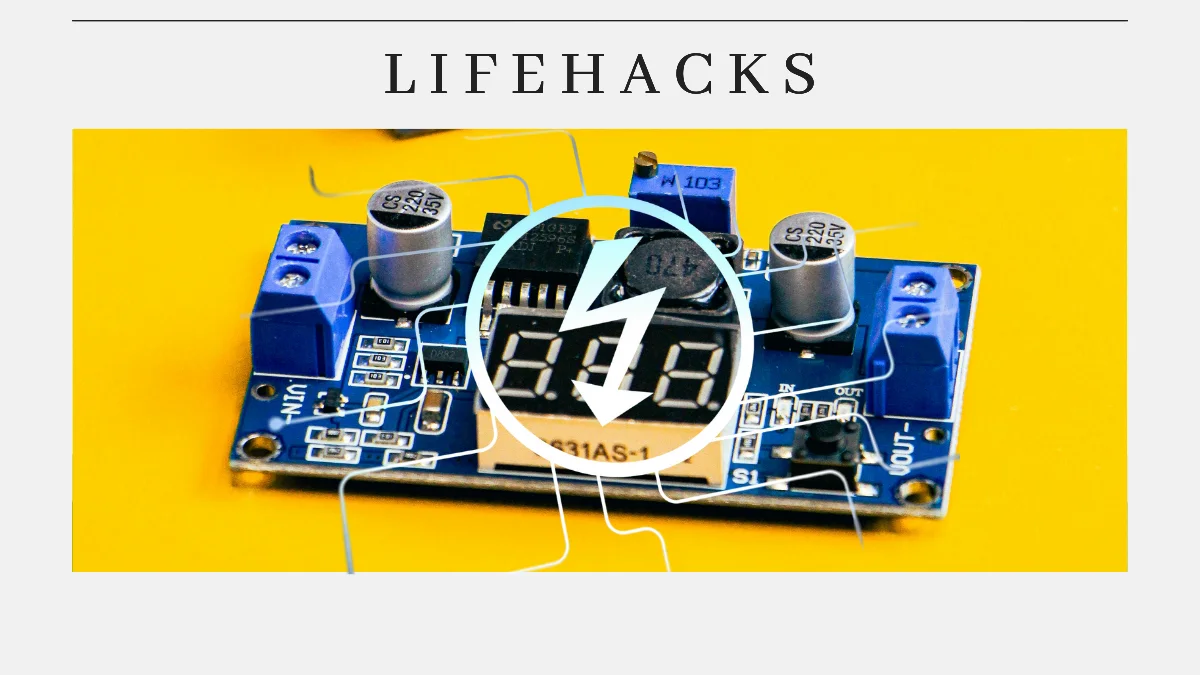
A wireless module is an electronic component in modern wireless devices that integrates chips, memory, and radio components onto a single board. This module is what makes wireless data transmission possible.
The radio components referred to here are WiFi, Bluetooth, LTE, 5G, and Low Power Wide Area Network (LPWAN).
- WiFi module: For short to medium range high speed wireless data communication, typically used for internet connections in home or office environments.
- Bluetooth module: For short-range data communication between personal devices (personal area network), such as smartphones, headphones, or sensors.
- LTE module (4G): For high-speed cellular connections with wide coverage, ideal for IoT devices that require high data throughput and mobility.
- 5G module: The latest generation of mobile technology, 5G changes device architecture to achieve extremely high speeds and extremely low latency.
- LPWAN Module: For long-range communication (kilometer radius) with very low power consumption, ideal for sending small amounts of data over long periods of time.
Wireless modules have main components that consume quite a lot of power, namely Radio Frequency (RF) transceivers, baseband processors, and Microcontroller Units (MCUs). RF transceivers consume a significant amount of power due to the need to convert digital data into electromagnetic waves and process signals from the air in real time.
The baseband processor itself plays a crucial role in managing all communication functions, including signal processing, modulation, and protocol management. Meanwhile, the MCU is relatively power-hungry due to its high workload when processing wireless data and managing radio connections.
The most energy-intensive activities in wireless communication occur during transmission, radio data reception, and idle listening. Power amplifier and base station components in cellular networks can even consume 50-80% of total energy.
From Fixed Power Modes to Adaptive Power Saving

Old-generation power management in wireless modules generally uses a fixed power management approach. This approach relies on rigid power switching between active, idle, and sleep modes. Often, the settings are based on timers or external interrupts manually.
This approach is called a static approach. Often, this approach has limitations, especially in dynamic environments. These limitations include low adaptability, power waste, complex network management, and inflexibility.
Therefore, there have been innovations towards adaptive algorithms. These innovations mark a shift from static systems to self-organizing systems. This approach is designed so that modules can learn and optimize their performance in real-time based on environmental conditions.
Adaptive is the main solution in modern wireless modules due to its dynamic capabilities. It is able to change communication parameters, such as transmission power, data rate, modulation, and frequency, based on changing environmental conditions in real time.
How Adaptive Power Saving Algorithms Work
Adaptive power saving algorithms in modern wireless modules work by dynamically balancing communication performance with energy consumption. These algorithms use real-time traffic analysis, battery level monitoring, and predictive modeling.
This is done to adjust when the device wakes up, transmits data, or enters low power mode. In principle, adaptive algorithms maintain a balance between data speed (throughput) and connection reliability.
Adaptive algorithms monitor several parameters in real time to ensure that power consumption does not compromise connectivity. The following parameters are monitored:
- Traffic data: A set of variables or metrics measured in real-time to describe the characteristics, volume, and movement patterns of wireless data.
- Signal strength: A numerical parameter that measures the level of radio signal power received by a wireless device. It is used to automatically adjust network operating parameters.
- Latency requirements: The maximum time allowed for data packets to arrive from source to destination. Algorithms dynamically adjust transmission parameters to ensure this time limit is met.
- User or device behavior: A collection of historical and real-time information about how users interact with the network, application usage patterns, device mobility, and received signal characteristics.
Hence, how do modern wireless modules make decisions automatically? The answer lies in Artificial Intelligence (AI). The module will integrate AI with Edge computing directly into the device.
Data will be analyzed locally to take instant action. Thus, the module no longer simply sends data to the cloud.
Key Types of Adaptive Power Saving Techniques
The following are key types of adaptive power saving techniques in modern wireless devices:
- Dynamic sleep scheduling: Optimizes battery life by switching components to low-power states based on usage patterns and operational requirements.
- Adaptive transmission power control: Adjusts transmission power based on link quality, distance, and environmental conditions to minimize energy consumption while maintaining connection reliability.
- Traffic-aware power scaling: Minimizes energy consumption by dynamically adjusting radio performance, sleep cycles, and hardware power states based on real-time data traffic load and network conditions.
- Context-aware power management: Dynamically adjusts energy usage based on real-time environmental conditions, user behavior, device status, and network traffic.
Machine Learning and AI in Power Saving Algorithms

Artificial Intelligence (AI) plays a crucial role in optimizing wireless power transfer (WPT) in modern wireless modules. The goal is to improve energy efficiency, extend battery life, and increase system reliability.
AI, particularly machine learning (ML), enables WPT systems to adjust operational parameters in real time. This will certainly overcome challenges such as load fluctuations, coil misalignment, and transfer distance.
Learning-based algorithms that use ML will improve performance independently. This is in contrast to rule-based algorithms, which rely solely on a series of predefined explicit rules.
The Future of Power Management in Modern Wireless Modules
The future of power management in modern wireless modules is determined by a shift towards higher efficiency. Its optimization will be supported by AI and advanced contactless energy transfer.
Wireless modules will become increasingly important in IoT, 5G, and electric vehicles (EVs). This is because power management is evolving from basic distribution to dynamic system-level intelligence.
In the future, power efficiency will remain a top priority in the design of modern wireless modules. This is due to a combination of technical demands, physical limitations of devices, and sustainability factors. Even today’s wireless modules are required to perform at high levels with minimal energy consumption.
Ultimately, smarter algorithms will result in longer battery life. Adaptive power saving in modern wireless modules is a useful feature for automatically extending battery life, making energy more efficient without sacrificing performance, and reducing latency.
Table of Contents
Muhammad

Hello, my name is Rifqi. I have studied how language can influence human interaction and impact sociocultural aspects. Currently, I work as a corporate content writer at Dimulti Type Approval. Through my writing, I hope to make difficult technical matters or everyday issues easier for you to understand.
Related Articles