NFC and RFID are two technologies that are similar in terms of usage, but they actually have many differences. Both are inseparable in supporting short-range communication.
You may already be familiar with how NFC and RFID technologies are used. We often see them in electronic money for entering stations or tapping smartphones to make payments.
The world of transactions and automatic identification is where these two technologies are most well-known. Hence, when do we use one or the other? To do this, we need to understand the differences between NFC and RFID so we can get the most out of them and use them appropriately.
Definition
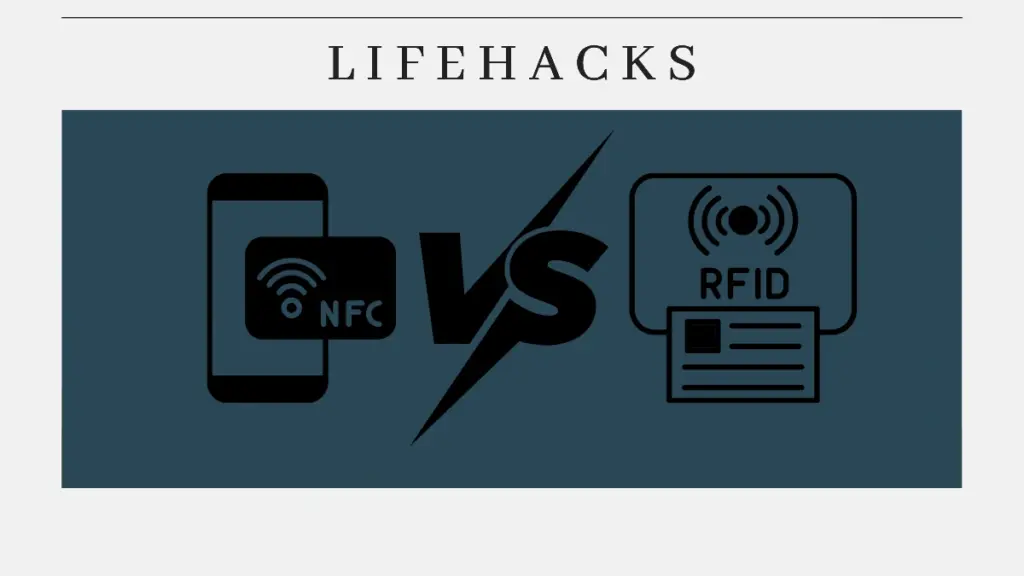
Before discussing the differences between NFC and RFID, you need to understand a brief definition of these two technologies. Understanding each technology will broaden your horizons and help you understand its differences.
What is NFC?
When discussing Near Field Communication (NFC), one cannot ignore the history of RFID, the pioneer of this short-range wireless technology. NFC operates using 13.56 MHz frequency waves with a maximum operating range of 10 cm.
NFC enables two-way (peer-to-peer) communication. Two devices can read data from each other in both directions. So, it’s not just reader-to-tag communication. This technology is commonly used in digital payments, device pairing, or building access.
What is RFID?
Radio Frequency Identification (RFID), as part of the history of NFC, is a technology that supports short-range and long-range wireless communication. In addition to its wide range, RFID also has a wide frequency range, from Low Frequency (LF) at 125-134 kHz to Super High Frequency (SHF) at 2.45 GHz-5.8 GHz.
RFID tags and readers can only communicate in one direction, meaning the reader only communicates with the tag. This technology is commonly used in tracking goods in buildings, parking systems, and access cards.
Differences Between NFC and Bluetooth
The definitions of NFC and RFID certainly highlight several differences between the two. The most striking differences are in communication distance and direction. Furthermore, there are differences in everyday use and security.
1. Communication distance
NFC and RFID have different communication distances. NFC has a shorter communication range, only capable of a maximum distance of 10 cm. Sometimes, communication requires closer proximity to actually attach.
Meanwhile, RFID has a longer communication range. With a wider radio frequency range, this technology allows for coverage of up to several meters, especially for active RFID types.
2. Communication direction
Regarding communication direction, NFC offers greater flexibility because this technology allows for two-way communication. Two devices can send and receive data, for example, a smartphone to a smartphone or a smartphone to an EDC.
On the other hand, RFID, its predecessor, only allows one-way communication. Readers can only read data from the tags.
3. Data storage
NFC has superior data storage capabilities compared to RFID. It can store more complex data, such as text, URLs, and media, with a storage capacity of up to 4KB.
RFID is not as easy to extract data from. It requires an expensive reader to extract data. However, the NFC data scanning feature is already available in various smartphones, making it easier to use.
4. Everyday uses
In terms of usage, NFC and RFID have different focuses. NFC is more commonly used in the personal lives of its users, for example, for digital payments, e-money, and device pairing.
Meanwhile, RFID is more widely used in the industrial sector. This technology is widely used for logistics, parking, goods tracking, and company access cards.
5. Security
In terms of security, NFC is safer to use. This is because its operating range is relatively short, thus avoiding unwanted risks. For personal use, NFC can often be integrated with additional security systems such as Face ID or fingerprints.
On the other hand, RFID carries a higher security risk. This is because its operating range is longer, so there is a higher risk of data being intercepted.
Application Examples
Given the differences between NFC and RFID, it’s clear that these two technologies are used for different needs. Here are some examples of how they are applied.
NFC applications
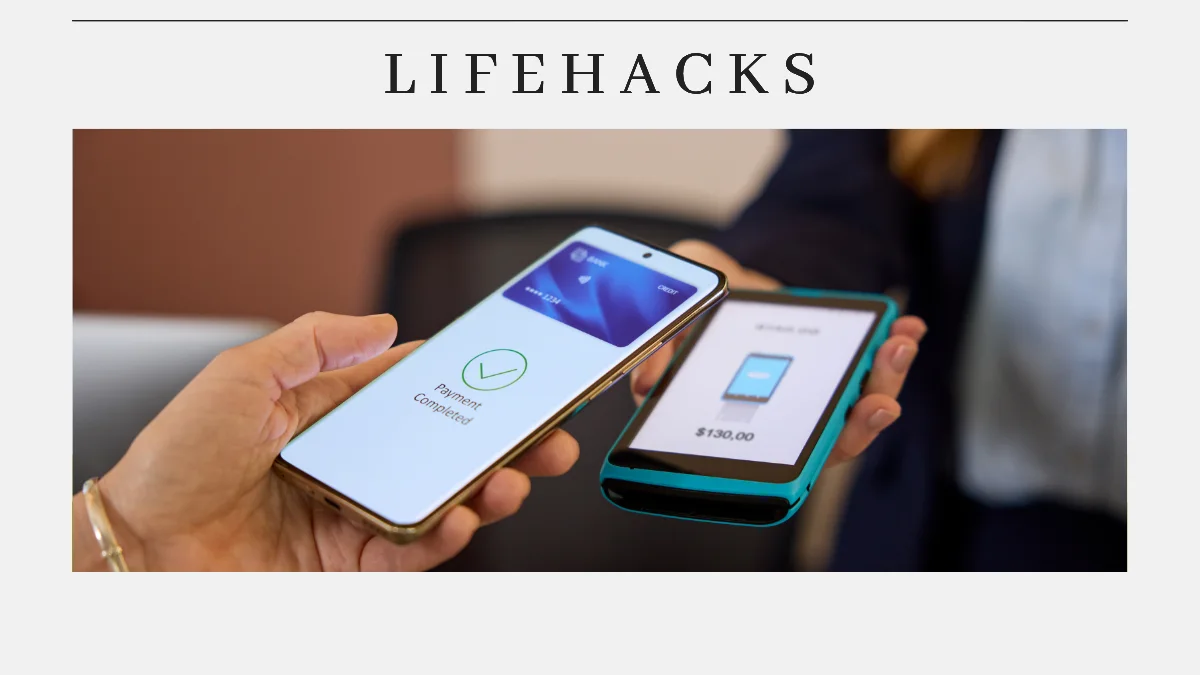
- Contactless payments: Given the history of NFC, contactless payments are the most well-known application of this technology.
- Public transportation: NFC is used for payments and access to trains or buses.
- Marketing and information: NFC tags on posters, stickers, or products are widely used to attract customers.
RFID applications
- Retail security: Preventing theft in stores with tags that emit a sound when passing a sensor.
- Warehouse inventory management: Performing large-scale counts without scanning each item.
- Access cards: Opening doors or parking spaces by tapping a card.
Which One is Better?
When asked which is better, NFC or RFID, the answer depends on the user’s needs. Both have their own advantages and disadvantages.
NFC has advantages in terms of speed and implementation. NFC eliminates the need to open an app and wait for a camera scan. Simply by bringing the devices close together, transactions or data exchanges can occur quickly.
In terms of implementation, NFC has been widely implemented in smartphones as a prominent feature. This is because it is more affordable for individual users or small businesses looking to offer a contactless payment experience.
On the other hand, RFID excels in terms of range and efficiency, allowing it to read multiple tags simultaneously without having to scan each one individually. This makes it suitable for warehouse and logistics tracking systems.
In large-scale implementations, RFID is more expensive, as it requires specialized readers and a complex backend system.
When to Choose Between the Two of Them?
If asked which to choose, the answer depends on your needs. NFC can be used for those prioritizing speed and security in transactions. It’s suitable for secure user-to-user interactions, contactless payments, and authentication.
Meanwhile, RFID can be used for those requiring large-scale identification and tracking systems. It’s suitable for long-range scanning, mass reading of multiple tags simultaneously, and automated warehouse or logistics tracking.
Table of Contents
Muhammad

Hello, my name is Rifqi. I have studied how language can influence human interaction and impact sociocultural aspects. Currently, I work as a corporate content writer at Dimulti Type Approval. Through my writing, I hope to make difficult technical matters or everyday issues easier for you to understand.
Related Articles